

When was the last time you took notice of the inscriptions on your plastic bottle, or pondered the difference between the fine print on your water sachet and the markings on your soda bottle? Perhaps you glanced at these small, often smudged details, only to put the container aside when it all seemed too confusing.
Whether it’s the water bottle you grab on the go or the colour-coded containers storing leftovers in your fridge, plastics permeate our daily lives in countless ways. While they offer tremendous convenience, they also pose significant environmental challenges, necessitating proper education and intentionality.
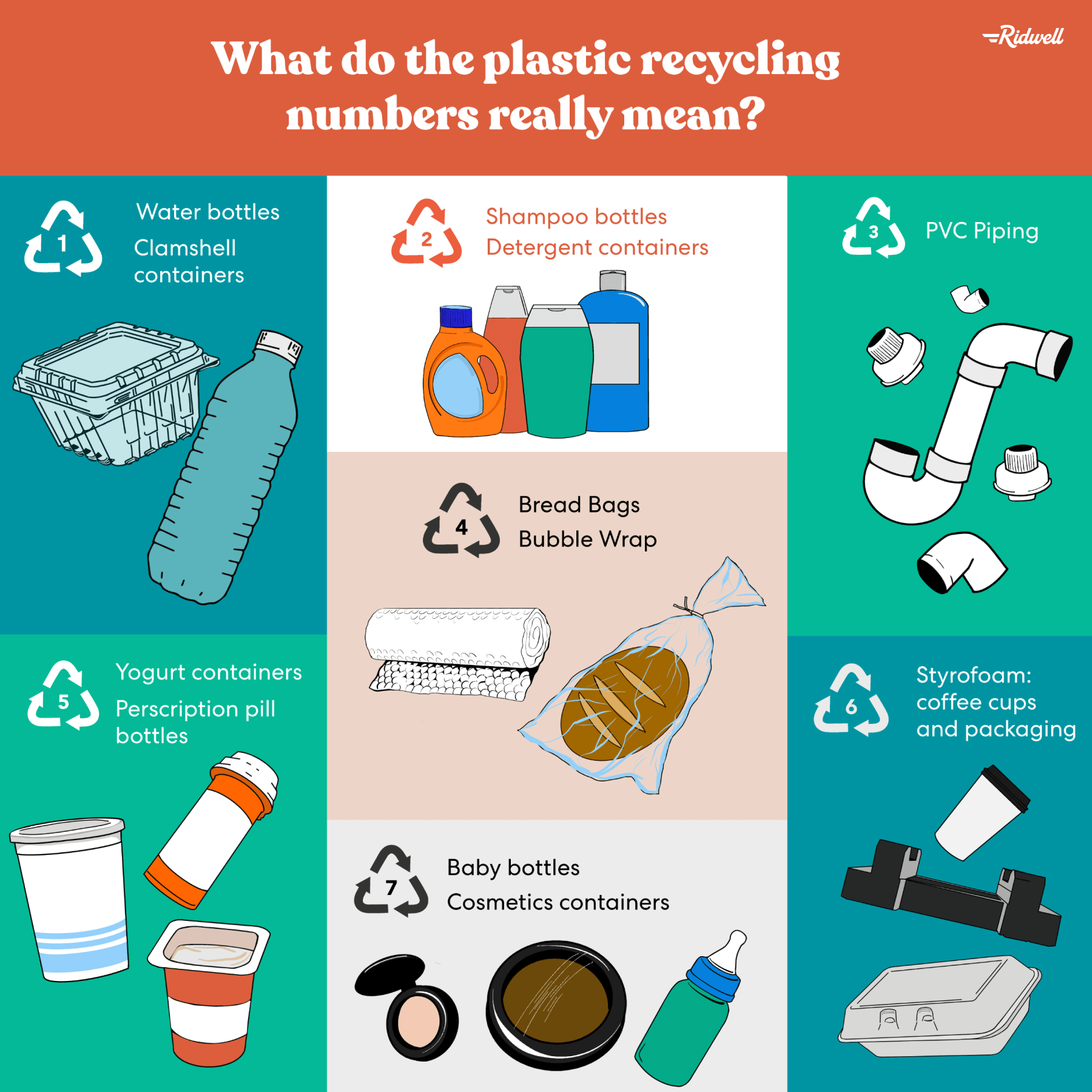
One of the ways to effectively navigate the landscape of plastic waste management is through understanding the different types of plastic resins. Each type—PET, HDPE, PVC, LDPE, PP, PS, and Others—brings unique properties and recycling considerations. From the lightweight durability of PET in beverage bottles to the robust reliability of HDPE in milk jugs, these plastics serve diverse purposes, each with varying recyclability. While PP can be repurposed into battery cables, PS presents recycling difficulties due to its composition. By grasping these distinctions and their environmental implications, we empower ourselves to make informed choices that promote sustainability and reduce our ecological footprint.
Source credit: Ridwell
What Are The Seven Main Plastics?
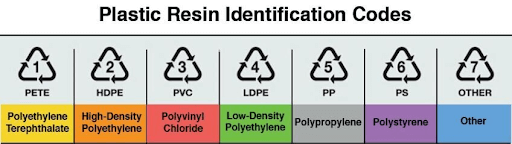
Not all plastics are the same, whether in terms of functionality or recyclability. To distinguish between these materials, we categorize them into seven primary types. Each of these has its distinct properties, applications, and recycling protocols. Let’s delve deeper into these types and better understand their significance.
PET or PETE (Polyethylene Terephthalate) –
- Symbol:
- Properties: Lightweight, strong, and often used for single-use beverage bottles.
- Recycling: Widely recycled. Used to make new bottles, clothing fibers, and carpeting.
HDPE (High-Density Polyethylene)
- Symbol
- Properties: Sturdy and resistant to moisture, commonly used for milk jugs and detergent bottles.
- Recycling: Easily recycled into new containers, and pipes.
PVC (Polyvinyl Chloride)
- Symbol
- Properties: Versatile and durable, found in plumbing pipes and medical equipment.
- Recycling: Less commonly recycled due to the release of hazardous chemicals during the process.
LDPE (Low-Density Polyethylene)
- Symbol
- Properties: Flexible and used in plastic bags, six-pack rings, and some bottles.
- Recycling: Can be recycled into products like trash can liners and floor tiles.
PP (Polypropylene)
- Symbol
- Properties: Tough and heat-resistant, used in yoghurt containers and bottle caps.
- Recycling: Often recycled into signal lights, battery cables, and kitchenware.
PS (Polystyrene)/ Styrofoam
- Symbol
- Properties: Lightweight and insulating, used in disposable cups and packing containers.
- Recycling: Challenging to recycle, but can be turned into insulation and light switch plates.
Other (Various Plastics)
- Symbol
- Properties: A catch-all category for plastics that don’t fit into the other categories, like acrylic and nylon.
- Recycling: Varies widely; some can be recycled into plastic lumber and custom products.
Why It Matters
Understanding these symbols and their implications can significantly impact our actions toward the environment. By familiarising ourselves with these symbols, we can make more informed decisions about the products we use and how we dispose of them.
So the next time you see a plastic symbol on your bottle, you’ll know what it means and can make a conscious effort to protect our environment. Responsible recycling starts with knowledge, and together, we can make a difference
Source credit: genpak.com