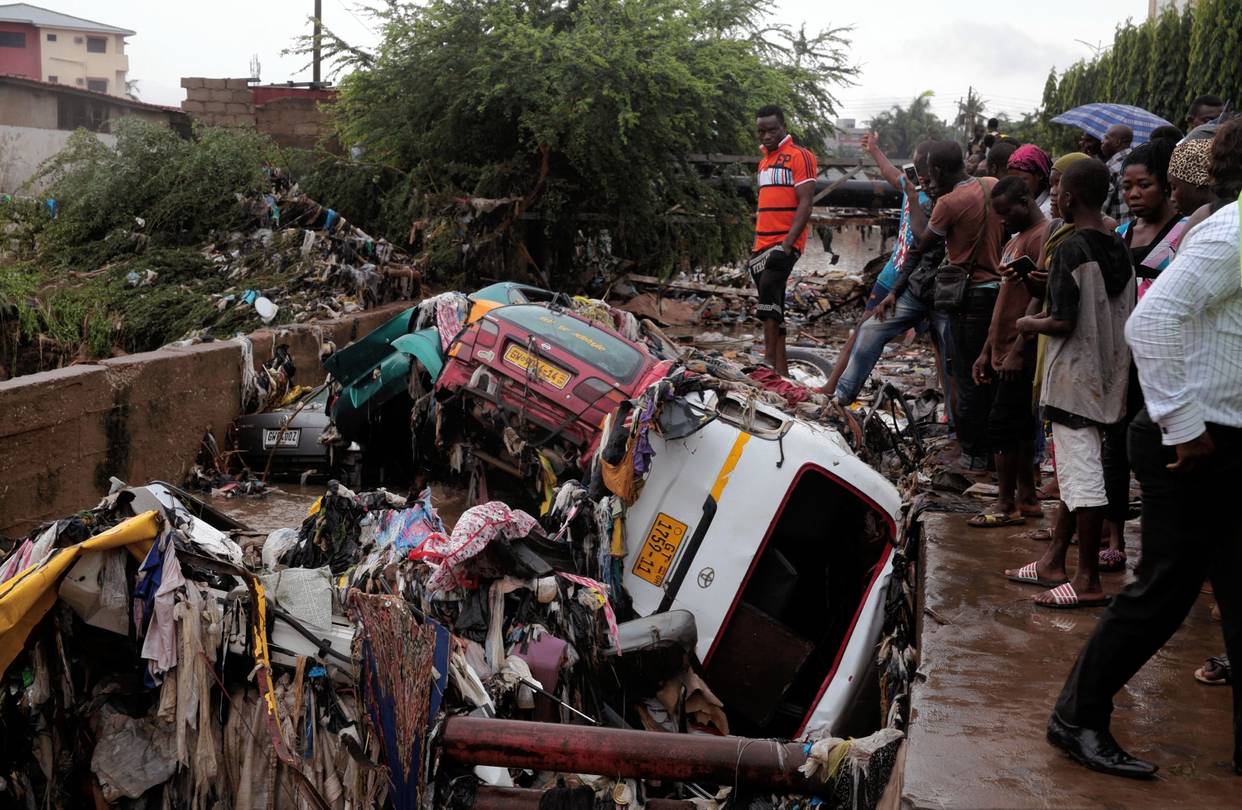


Clogged drains. Choked streets. Families stranded. Children swept away.
When floods hit Accra, they do more than soak the city — they expose a hard truth we’ve learned to ignore. Much of the destruction isn’t just from rain. It’s from plastic.
Let’s talk about it.
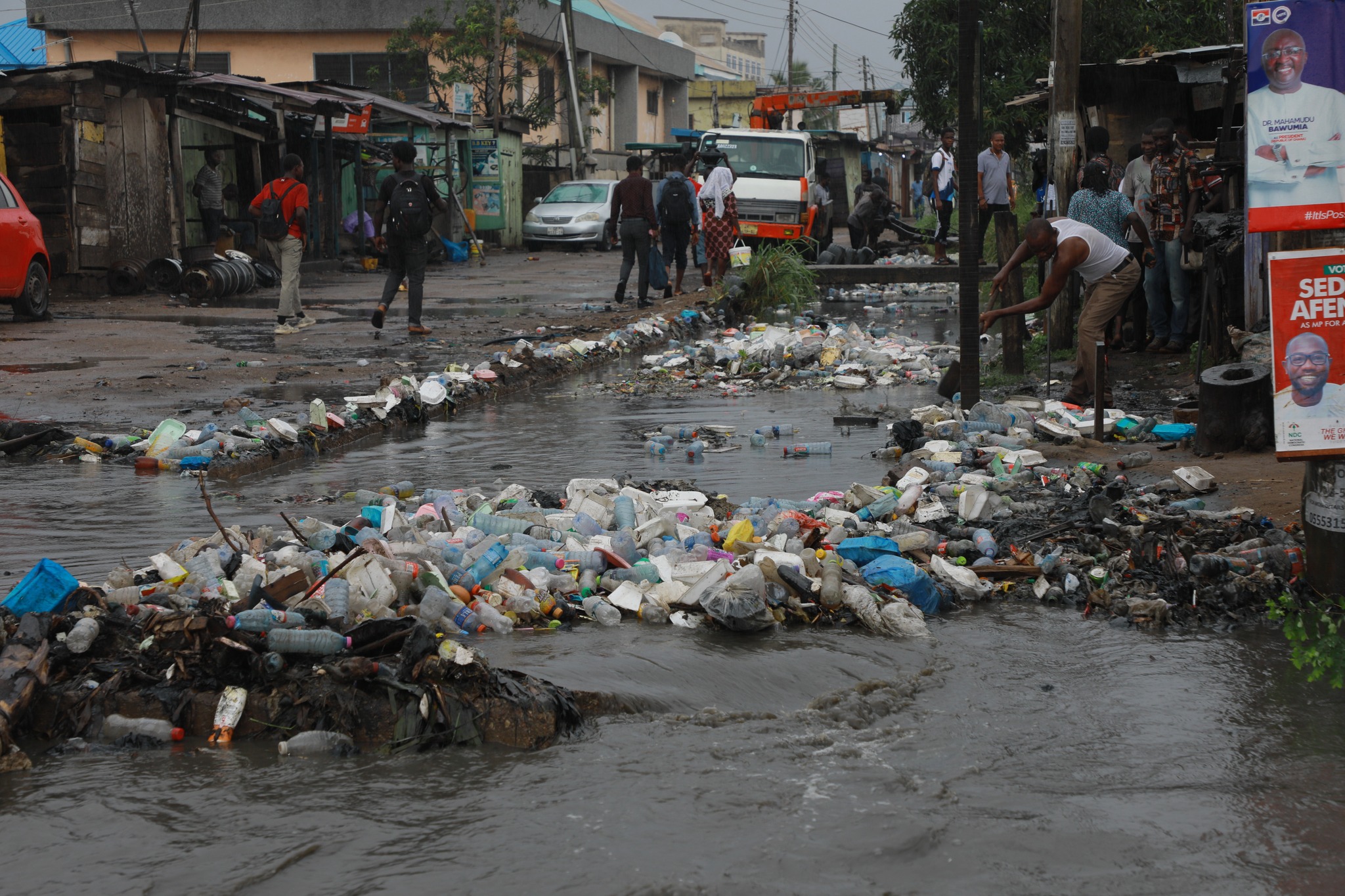
Rainfall and floods, overtaken with filth. Credit: Global Photo Agency
More Than Just a Storm
Ghana has faced many tragedies. The June 3rd disaster. The flash floods that submerge entire neighborhoods. Every rainy season, we mourn. Every rainy season, we promise change. But as floodwaters rise, so does the plastic — bags, bottles, wrappers — spilling from choked gutters and neglected drains.
This isn’t just a natural disaster. It’s a manmade one.
Walk through Makola, Kejetia, or even your own neighborhood. You’ll find drains permanently clogged with plastic. In many places, the gutters have become dump sites. So when the rains fall, the water has nowhere to go. Homes flood. People lose everything. Sometimes, even their lives.
This is the quiet connection we don’t talk about enough:
Plastic waste leads to blocked drains. Blocked drains lead to flooding. And flooding leads to loss.
The Cost of Convenience
Plastic has become so embedded in our daily lives that we hardly notice it anymore. Somehow we seem to have become accustomed to seeing the waterlogged drainages brimming with a blend of putrefying matter and the ever-resistant plastic waste. And when the heavens unleash their fury, the story takes an ominous turn. Floods don’t just destroy homes — they steal time, safety, and dignity. They displace dreams.
And yet, this is a crisis we can prevent. Because it isn’t just a waste problem. It’s a system problem. One that needs urgent, collective action.
A Call to Reimagine
As The Wall Street Journal once put it, Ghana’s story today is about a nation caught between progress and responsibility. But we believe it doesn’t have to be a choice.
Ghana’s plastic paradox isn’t just a local woe – it’s a shared challenge. To navigate this storm and make sense of the complexities of environmental and societal progress, we need to stand up, innovate, and act.
That is why at Ishara, we are building a different way forward; one where plastic is not just waste, but a resource, traceable from collection to reuse, and one where waste pickers — the very people who keep our streets clean — are valued, paid fairly, and part of a transparent system.
Stay with us as we embark on a journey to unravel the plastic puzzle while sharing stories that light the path toward a cleaner, greener future.
Because we can’t stop the rains.
But we can rebuild the system that turns rain into ruin.